Tuesday, October 29, 2013

Shop-Click-Drive: GM to Reportedly Extend Online Car Sales Tool to Entire Dealership Network by End of Year

General Motors has announced that it plans to expand its new online shopping tool that allows customers to bypass the showroom by purchasing their brand new vehicle online.  The program, Shop-Click-Drive, lists a total of 48 participating dealers on its website, but GM reportedly plans to extend the new web-based application to its entire dealership network by the end of 2013.
 
According to the Shop-Click-Drive website, a vehicle can be purchased online from a participating dealer around the clock, 24/7, and in just five (5) short steps:
1. Get Started - Select a vehicle from a participating dealership's website.  Click here to find a participating dealer and click on "participating";
2. Estimate Payments - See available financing plans, the latest incentives, and estimate your trade-in value if applicable;
3. Apply for Credit - Complete your secure and confidential credit application online and hassle free;
4. Personalize & Protect - Shop for additional vehicle personalization and protection options, including GM accessories, extended warranties, and more;
5. Scheduled Delivery - Schedule a trade-in evaluation, arrange a test drive, sign the sales paperwork, and take delivery of the vehicle, all on your time schedule.

About 900 cars have been sold so far through the Shop-Click-Drive program.  Of the 900, only 5 have elected to have the vehicle delivered directly to them, while the some 895 others have opted for a trip to the showroom to finalize the deal face-to-face.

As expected, many dealers are reportedly not fond of the new program, since it nearly eliminates their chance to sell consumers profitable service work, add-ons or finance and insurance products with their new cars.  The option is still there to purchase these items, but the decision to purchase is more "pressure free" than at the dealership.  Other dealers, however, reportedly see it as just another way to reach millennial purchasers who increasingly seek to make many purchases online.

Beth Wells
Helping Consumers Get Rid of Lemons, 9 Years Running


Thursday, October 10, 2013

Got a New Vehicle? Make Sure to Document Any Problems!

Do you have a new vehicle?  If so, hopefully your first few years will be problem free.  But, if you have any problems with your new vehicle in the first year, make sure to document everything.  You never know if you will need it in the future.

Most consumers think that if they have a problem with their vehicle that the dealer cannot find or cannot fix, then the manufacturer will stand behind their warranty.  Unfortunately, for most motor vehicle manufacturers, this is not the case. In fact, many manufacturers will try to attach the consumer, claiming that the consumer is lying about the defect, is causing the defect because they are driving the vehicle wrong, is imagining the defect, or simply wants out of the vehicle because they cannot afford it.  For most manufacturers, customer loyalty goes out the window and the only thing that becomes important is the bottom line.  One way to make sure you have the best case possible, if you end up with a lemon vehicle and no way out but a lawsuit, is to build your evidence early on.
 
Keep a notepad and pen in your car.  When the vehicle malfunctions, write down what occurred, when and where the malfunction occurred, and under what circumstances it occurred, such as the temperature, speed of the vehicle, and length of time driving before the occurrence.  Of course, wait to make your diary notes in the notepad until you are in a safe location and off the road.  Or, if you prefer to keep the diary on your mobile device, you can do that too.  The key is to write it down as soon as possible after you experience the malfunction.
If the defect is something that can be safely recorded on video or in photographs, then take photographs and make videos.  Find some way of documenting the date and/or time in each photograph or video.

Keep your phone records and a list of the phone numbers you call related to the vehicle defects such as the local dealer's service center or the manufacturer's consumer hotline.  This way you can prove the contacts that you have had with the dealership and/or the manufacturer if they later deny it.

Make sure that you get repair invoices for each visit, and that the repair orders accurately describe the dates the vehicle was in the shop and the problems that your vehicle is experiencing.  It is alarming the number of repair orders that I see that do not properly document the dates that the vehicle was in the shop, do not properly describe the problem, or do not even include problems that the consumer brought the vehicle into the shop for. When the repairs are not properly documented, this can hurt even the best lemon law case.

If the dealer fixes the problem, then you won't need the evidence you have compiled.  But, if they do not, and the problem is a substantial problem, then you will.  And, it is certainly better to be safe than sorry when it comes to an expensive item like a motor vehicle that you need to get to work, to the grocery, or to the doctor's office.

Beth Wells
www.OhioLemonLaw.com
www.KentuckyLemonLaw.com
Helping Consumers Get Rid of Lemons, 9 Years Running

Monday, October 7, 2013

Kawasaki Issues Safety Recall for Police Motorcycles

Kawasaki Motors Corp., U.S.A. has recalled all model year 2012-2013 Kawasaki Concours 14 police motorcycles. According to Kawasaki Motors Corp., U.S.A., the additional police accessories installed on the motorcycle, such as emergency lighting, radios, and other gear powered by a second battery, may cause the 30-amp main fuse to blow, and the additional police wiring harness may chafe leading to a short which may blow the main fuse. In either circumstance, if the fuse blows, the engine may stall, and the vehicle could crash. This is obviously a safety concern for the men and women who protect and serve.

According to the National Highway Traffic and Safety Administration ("NHTSA"), Kawasaki Motors Corp., U.S.A. will notify vehicle owners directly, and its authorized dealers will correct the electrical system problems free of charge. Owners may also contact Kawasaki Motors Corp., U.S.A. direct at 1-866-802-9381. Owners may also contact the NHTSA Vehicle Safety Hotline at 1-888-327-4236 (TTY 1-800-424-9153), or go to www.safecar.gov.
To read more about the recall, and to read additional recall documentation, click here.

If your police department has a Kawasaki Concours 14, make sure to get it into a Kawasaki authorized dealer right away.  To find a dealer near you, click here.

Beth Wells
Helping Consumers Get Rid of Lemons, 9 Years Running

Wednesday, September 4, 2013

You Finally Have A BBB Auto Line Decision...So What's Next?

Do you have a case currently pending with the Better Business Bureau ("BBB") Auto Line against your motor vehicle manufacturer?  If so, then at the end of the case your arbitrator will issue a decision and you will be given 14 days to accept or reject the decision.  The form that you will be asked to sign will likely look similar to the BBB form found here. 
 
In my own experience, I have seen BBB Auto Line arbitration decisions which award the consumer something different than what they might be entitled to under the letter of the law, and in some instances, something less than they would be entitled to under the letter of the law.  For that reason, and others, the decision whether to accept or reject a BBB Auto Line decision should not be taken lightly. 
Before accepting or rejecting the arbitrator's decision, you should read it carefully and consider speaking with a local lemon law attorney in your state if the decision awards you something less than what you want or what you think that you are entitled to. 

Seeking legal advice before accepting the BBB Auto Line decision will allow you to make an informed decision and proceed with a lawsuit in Court against the motor vehicle manufacturer if warranted or necessary.  On the other hand, if you seek legal help after accepting the arbitrator's decision, in most cases it will be too late to change your mind.  Typically, by accepting the decision, you will be bound to the decision unless the manufacturer fails to comply with the decision itself, which is not likely.  In such a circumstance, you cannot file a lawsuit in Court of you change your mind.

Not sure whether to accept give up your legal rights and accept your BBB Auto Line decision?  Consult an experienced Lemon Law attorney in your state.  To find one in your state, you can go to www.USLemonLawyers.com.  But act quickly, especially if your 14 days are already ticking.  Also, for every legal right you have, there is a limited amount of time to file a lawsuit in court before your rights expire.

Good luck!

Beth Wells
Helping Consumers Get Rid of Lemons, 9 Years Running


Monday, September 2, 2013

Automakers Slash Battery Car Prices


2014 Chevrolet Volt
General Motors has just announced a price cut for its 2014 Chevrolet Volt plug-in.  The "extended range electric vehicle" will carry a $34,995 sticker price-- $5,000 less than the 2013 model. 

But GM is not the only automaker slashing prices.  In fact, Nissan led the charge, reducing the base price of the 2013 Nissan Leaf SV from $35,200 to $31,820, and introducing a base model 2013 Nissan Leaf S at $28,800.  Honda has followed suit, cutting the monthly lease price of its new Fit EV from $389 to $259.  Smart has reduced the lease price of its third-generation Electric Drive to just $139.  And, Ford has made cuts to the price of its Focus EV. 
2013 Nissan Leaf
Why the sharp cuts in electric vehicle prices?  First, as production volumes increase, the cost to build a battery-car has begun to drop.  Second, California regulators are requiring automakers to produce a minimum percentage of zero-emission vehicles.  If they fall short, they could be barred from selling vehicles in California.  Moreover, seven states have copied the California guidelines and more are expected to follow suit.  So, losses on electrical vehicles are marginal compared to the possibility of being barred from selling vehicles in as many as eight states. 
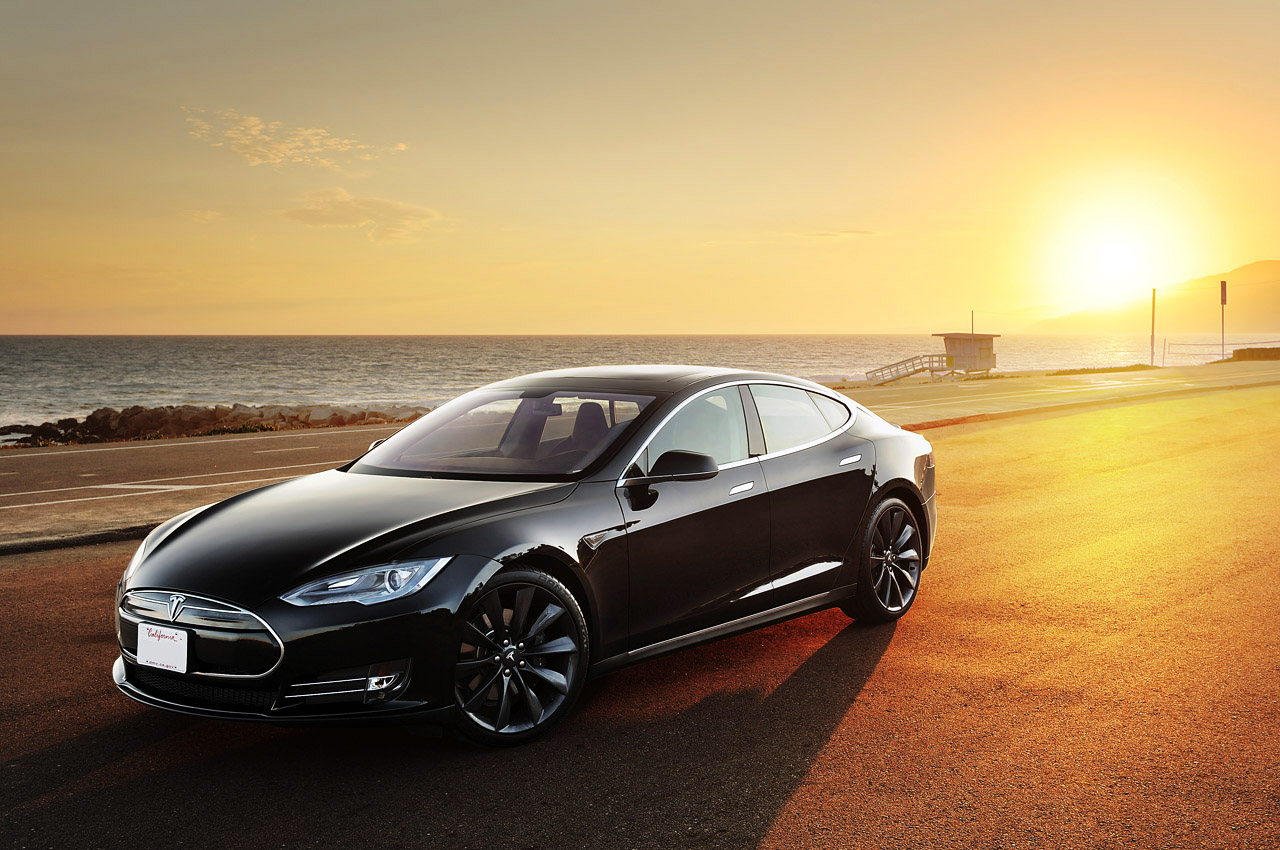
Tesla Model S
The price reduction is certainly an incentive to consumers, who will also enjoy a $7,500 federal tax credit for purchasing most electric vehicles, in addition to incentives in the states of California and Colorado. 

Currently, the 2013 Nissan Leaf is the top selling battery vehicle.  And, Tesla holds the market for high-end, sporty electric vehicles, surprising the auto industry with a second quarter profit for 2013.  The base price of the Tesla Model S battery sedan is currently $62,400, but this steep price has obviously not dissuaded many customers.

Will the price cuts get more consumers into battery powered vehicles?  Only time will tell.

    Beth Wells
Helping Consumers Get Rid of Lemons, 9 Years Running

Friday, August 30, 2013

New Rule Makes Motor Vehicle Recalls Easily Accessible

The U.S. Department of Transportation's National Highway Traffic Safety Administration ("NHTSA") announced on August 14, 2013 that it will now require automakers and motorcycle manufacturers to provide consumers with a free online tool enabling them to search recall information for individual vehicles by Vehicle Identification Number (VIN).  To read NHTSA's Press Release, click here.   
This online feature will allow consumers to instantly determine whether action is required to address an uncompleted safety recall that affects their personal vehicle, or a used vehicle which they are considering purchasing. The information must be updated weekly, at minimum, and automakers and motorcycle manufacturers have one year to comply with the new rule.

The goal of the new rule is to increase recall completion rates (reportedly at about 70%) through greater consumer awareness.  The new rule also requires automakers and motorcycle manufacturers to use the Department of Transportation’s logo on recall letters sent to owners.  It is hoped that this will further emphasize the importance of the communication.  The new rule also requires automakers and motorcycle manufacturers to inform NHTSA what type of propulsion system and crash avoidance technologies their vehicles have.  It is expected that this information will assist NHTSA in its efforts to spot "defect trends related to these systems and technologies". 
Many automakers already have this feature for consumers on their own sites. In fact, the Center for Auto Safety has a recall section that links to the sites of all automakers that already provide consumers with recall searches. For a link to the site, click here.

One thing is for sure-- this new rule will allow consumer to be better informed before purchasing a used car, truck, or motorcycle.

Beth Wells

Helping Consumers Get Rid of Lemons, 9 Years Running


Monday, August 26, 2013

Keeping Kids Safe Around Motor Vehicles

Believe it or not, 3 out of every 4 car seats is used incorrectly. As a result, one of the leading causes of death for children 1-13 is vehicle crashes.  

In order to help keep kids safe, the National Highway Traffic Safety Administration ("NHTSA") has released a booklet, "A Parent's Guide to Playing it Safe with Kids and Cars".  This booklet is designed to equip parents with easy-to-understand information about today’s vehicle safety features, car seats and how to keep kids safe in and around vehicles.


According to NHTSA, the top 4 things that you should always remember about kids and cars is:
(1) Use a car seat for every trip, even when you're just going down the street;
(2) Select a car seat based on your child’s age and size, and always follow the manufacturer's directions;
(3) Make sure your car seat is compatible with your vehicle by checking the car seat manufacturer’s instructions;
(4) Keep kids in the back seat at least through age 12.
 
So, keep your kids safe!  To read the complete booklet, click here, then click on the PDF link for the booklet.
Beth Wells

Helping Consumers Get Rid of Lemons, 9 Years Running